SEStran Press Releases
News Archive

Date: 11th December 2008

SEStran’s board today welcomed the Ministerial announcement on the Strategic Transport Projects Review (STPR). The review includes several projects that will be of benefit to the SEStran region.

Among the 29 projects announced, 17 will make a significant contribution towards meeting SEStran’s goal of developing an integrated sustainable transportation system for South East Scotland.

SEStran Chair, Cllr Russell Imrie said:

“There is a much that is of benefit to the SEStran region in the Strategic Transport Projects Review and we welcome the continued commitment to schemes like Airdrie-Bathgate Railway, Borders Railway and Edinburgh Trams. Also the continued commitment to the new Forth Crossing with the existing bridge being used for public transport priority is particularly welcome and has the potential to provide an elegant solution to the need to cater for continued growth while at the same time encouraging alternatives to the private car.

 Among the new proposals the commitment to Rail Electrification, extensive Park and Choose, East of Scotland Rail Improvements, Edinburgh Glasgow Rail Improvements, Haymarket Station Upgrade, upgrading of A720 junctions which we hope will see the long awaited grade separation of Sheriffhall Roundabout  and access improvements to Grangemouth including the A801 River Avon Gorge, M9 Junction 6 Upgrade and Rail Improvements are particularly welcome.

 However, many key SEStran projects are not included. We feel that these are essential to achieving our goal of building a comprehensive, sustainable transportation system for the region, as laid down in our Regional Transport Strategy (RTS).

“For example, there is a need for an Edinburgh outer orbital Bus Rapid Transit System, to link the growing network of park & ride sites and offer motorists travelling between areas to the east and west of the capital an alternative to using the car. The Levenmouth rail link has the potential to revive the economy of a large part of Fife and make the area far more attractive as a place to live and for business. A business case exists for introducing a foot passenger ferry service across the Forth, providing quick access to Edinburgh for commuters from Fife and with the potential to take hundreds of cars a day off the region’s roads. 

“We also hoped to see the development of tram extensions In Edinburgh and to West Lothian; a new rail chord at Charleston ; improved  road links to Edinburgh airport; a new bypass for Rosyth and a commitment towards the development of high speed rail services Between Edinburgh and Glasgow”.

“All of these projects are designed to achieve our goal of cutting traffic congestion, reducing the region’s carbon footprint and making public transport the mode of choice for most journeys”.

“We will be examining the STPR in detail, to assess its full implications for the region and then seeking an early meeting with the Transport Minister, our sister RTPs and local authority partners to discuss the way forward”.

**A full breakdown of the projects and their implications for SE Scotland is contained in the notes section of this release**.

SEStran - South East of Scotland Transport Partnership - is one of seven new Statutory Regional Transport Partnerships (RTP) created by the Transport (Scotland) Act 2005 and is a partnership of eight local councils covering the Borders, East Lothian, West Lothian, Midlothian,  Edinburgh, Fife, Falkirk and Clackmannanshire.

For further information, please contact:

Andrew Dougal, SEStran Communications Officer

T: 0131-524-5161

M: 07889-010-291

E: Andrew.dougal@sestran.gov.uk


Notes

STRP Projects with implications for transportation in SE Scotland

National Projects
Project 5 - Route Management to optimise the quality and performance of the road network.
Including the A92 Edinburgh – Dundee, A1 Edinburgh- Scottish Border and  A68/A7/A702 Edinburgh – Scottish Border.

Project 6 – Electrification of the Rail Network to reduce journey times
Applying initially to Edinburgh-Glasgow and other Central Belt routes, with routes north to Aberdeen and Inverness to follow.

Project 7 - Reconfiguration of national rail timetable to reduce journey times.
To reduce train journey times between Aberdeen and the central belt by up to 20 minutes.

Project 8 - Park & Ride and Park & Choose to offer commuters an alternative to travelling into town centres by car.
There are currently seven sites under consideration or already being developed within the SEStran region, in addition to those already in operation

Project 22 – Targeted road congestion/ Environmental relief schemes, which aim to reduce congestion, improve journey times and cut emissions on the road network.
Junction improvements for the A720 Edinburgh bypass

North & North East
Project 23 – Rail improvements between Aberdeen and the Central Belt, which aims to make rail travel more competitive for both passengers and freight.
Phase 1 will include reworking the passenger train timetable on the Aberdeen-Dundee-Edinburgh-Glasgow route to provide one 2 hour journey express service to Edinburgh each hour and separate stopping services for intermediate stations. Also overall line speed improvements between Aberdeen and the Central Belt of up to 20 minutes

Central Scotland
Project 5 - Route Management to optimise the quality and performance of the road network.
This will build upon Transport Scotland’s route management on the A92 between Edinburgh and Dundee.

Project 9 – Intelligent transportation systems on the Motorway and Trunk Road network, to improve journey times between Glasgow and Edinburgh and support regional Park & Ride/Choose strategies.
A range of initiatives will be phased in across the M8, M90, A90 and A720 approaching Edinburgh in two phases.

Phase 1 will introduce variable speed limits, delay information displays and ramp metering at key junctions, together with average speed enforcement.

Phase 2 will see the use of the use of the hard shoulder as an additional lane and extended use of ramp metering

Phase 3 Will involve the use of the hard shoulder our introduction of road widening to create a lane for priority vehicles.

Project 13 – East of Scotland rail improvements to provide increased capacity and more services in the region, on some of Scotland’s busiest rail lines.
The project will include new rolling stock, line upgrading and new signals, and more frequent or faster services on the following routes:

  • West Calder – Haymarket
  • Edinburgh – Newcraighall
  • Edinburgh – Dunbar
  • Edinburgh – Cowdenbeath
  • Haymarket - Kirkcaldy

Project 14 – Forth Replacement Crossing, to provide additional capacity for the existing structure, which requires major repairs.
The new structure will include the provision of a dedicated multi modal corridor, including the possibility of a future light rapid transit link between Edinburgh and Fife. The existing bridge will continue to be used for public transport only

Project 15 – Edinburgh – Glasgow rail improvements to enhance rail services on the route.
The project will include electrification between Edinburgh & Glasgow, a new Station at Gogar, allowing 13 trains per hour and a journey time of 35 minutes. It would also provide access to Edinburgh Park for both Edinburgh & Glasgow services. A bus interchange would also be required.

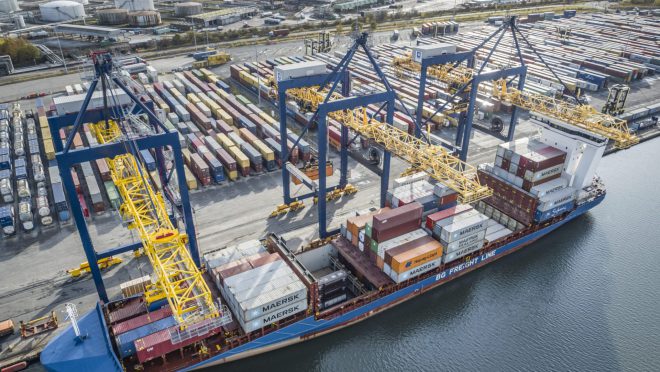
Project 20 – Grangemouth road & rail access upgrades to improve rail access to Grangemouth port and the freight hub and road access to the motorway network.
The project will include; upgrading Junction 6 on the M9 & A801 between Grangemouth and the M8; electrification of the railway between Grangemouth and Coatbridge; track modifications to improve access and an increased loading gauge to allow larger containers to be carried by train.

Project 21 – Haymarket Station Upgrade, to improve this key public transport interchange.
The project will include a major increase in public access to rail services  at this key transport node.

Project 22 – Targeted Road Congestion and environmental relief schemes which aim to reduce congestion, improve journey times and cut emissions on the road network.
The project will include junction improvements for the A720 Edinburgh city bypass.

Project 25 – Light Rapid transit (LRT) between Edinburgh and Fife, in order to increase transport capacity between the city and growing commuter communities in Fife and to support proposed developments at Rosyth, the Forth replacement crossing and Edinburgh Airport.
                                                   

Project 28 – Development of an Inverkeithing – Halbeath Railway line to reduce train journey times from Edinburgh to Perth, Aberdeen and Inverness, on local Fife services and to provide improved access to Rosyth port.
The project will involve the construction of a direct dual track rail link between Inverkeithing and Halbeath, with new junctions at each location and a park & Ride facility at Halbeath. The development would serve commuters, long distance train travellers and provide better freight access to Rosyth